The future of work is no longer a distant concept — it's unfolding right now. Advances in artificial intelligence and automation are transforming industries, redefining job roles, and challenging long-held assumptions about how work gets done. For organizations and professionals alike, adapting to this shift is not optional — it's essential.
This moment presents both uncertainty and opportunity. Those who understand the evolving landscape can position themselves not just to survive, but to lead.
The Acceleration of Change
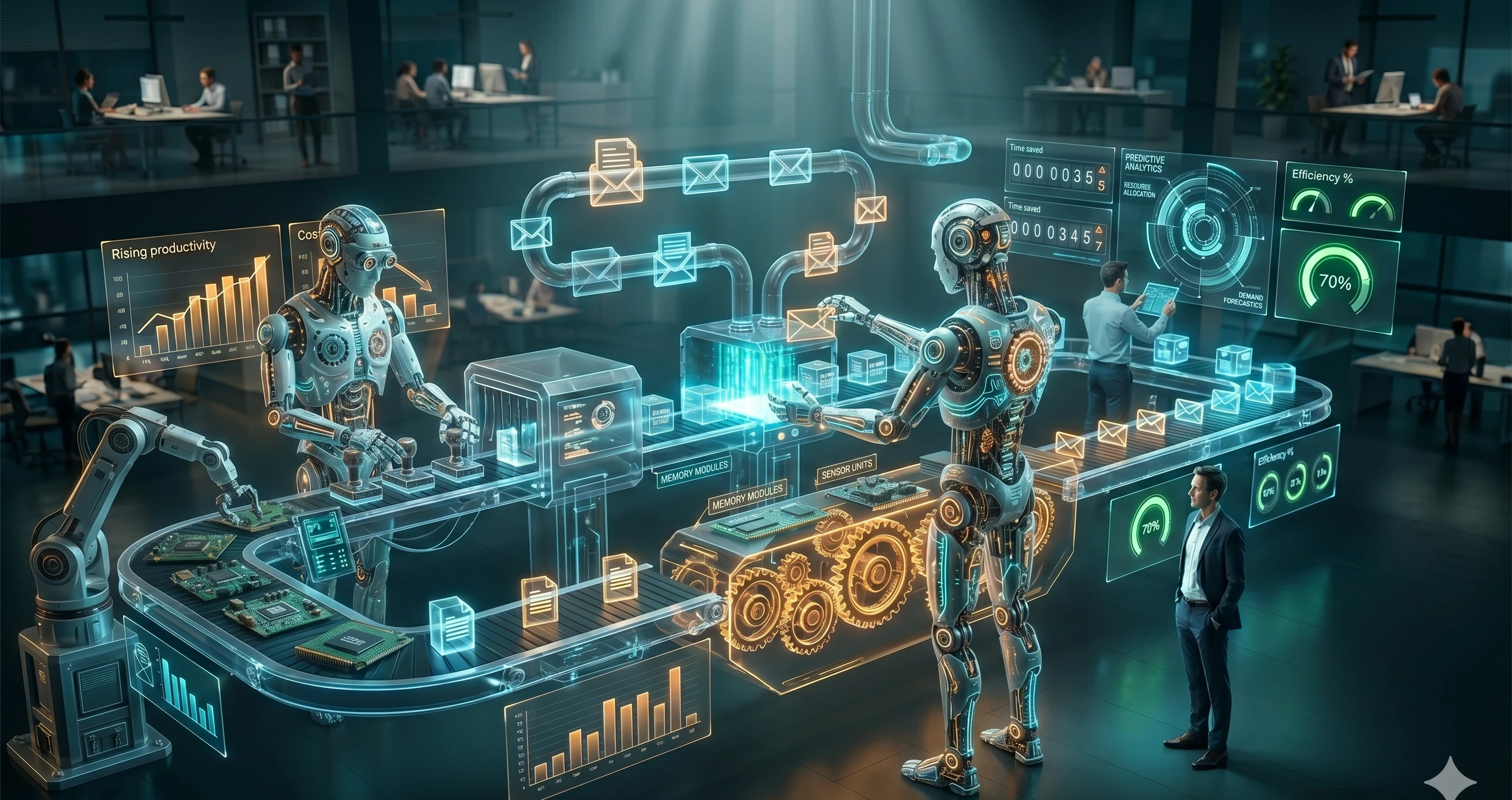
Over the past decade, AI has evolved from a niche technological capability into a core business driver. What began with simple automation — scripts, repetitive task handling, and basic data processing — has now expanded into intelligent systems capable of learning, reasoning, and decision-making.
From customer service chatbots to predictive analytics and generative AI tools, businesses are leveraging these technologies to increase efficiency, reduce costs, and unlock new value streams. Automation is no longer limited to manual or routine tasks; it is now augmenting cognitive work as well.
Jobs: Transformation, Not Just Displacement
One of the most common concerns surrounding AI is job loss. While it's true that certain roles are becoming obsolete, the broader reality is more nuanced. AI is not just eliminating jobs — it's transforming them.
**Roles most affected:**
- Repetitive administrative tasks
- Data entry and basic processing
- Routine manufacturing operations
**Roles on the rise:**
- AI and data specialists
- Cybersecurity experts
- Creative strategists
- Human-centered roles like coaching, leadership, and design thinking
Many jobs are evolving into hybrid roles where humans work alongside machines. For example, marketers now rely on AI tools for analytics and content generation, while still driving strategy and creativity.
The Rise of Augmented Work
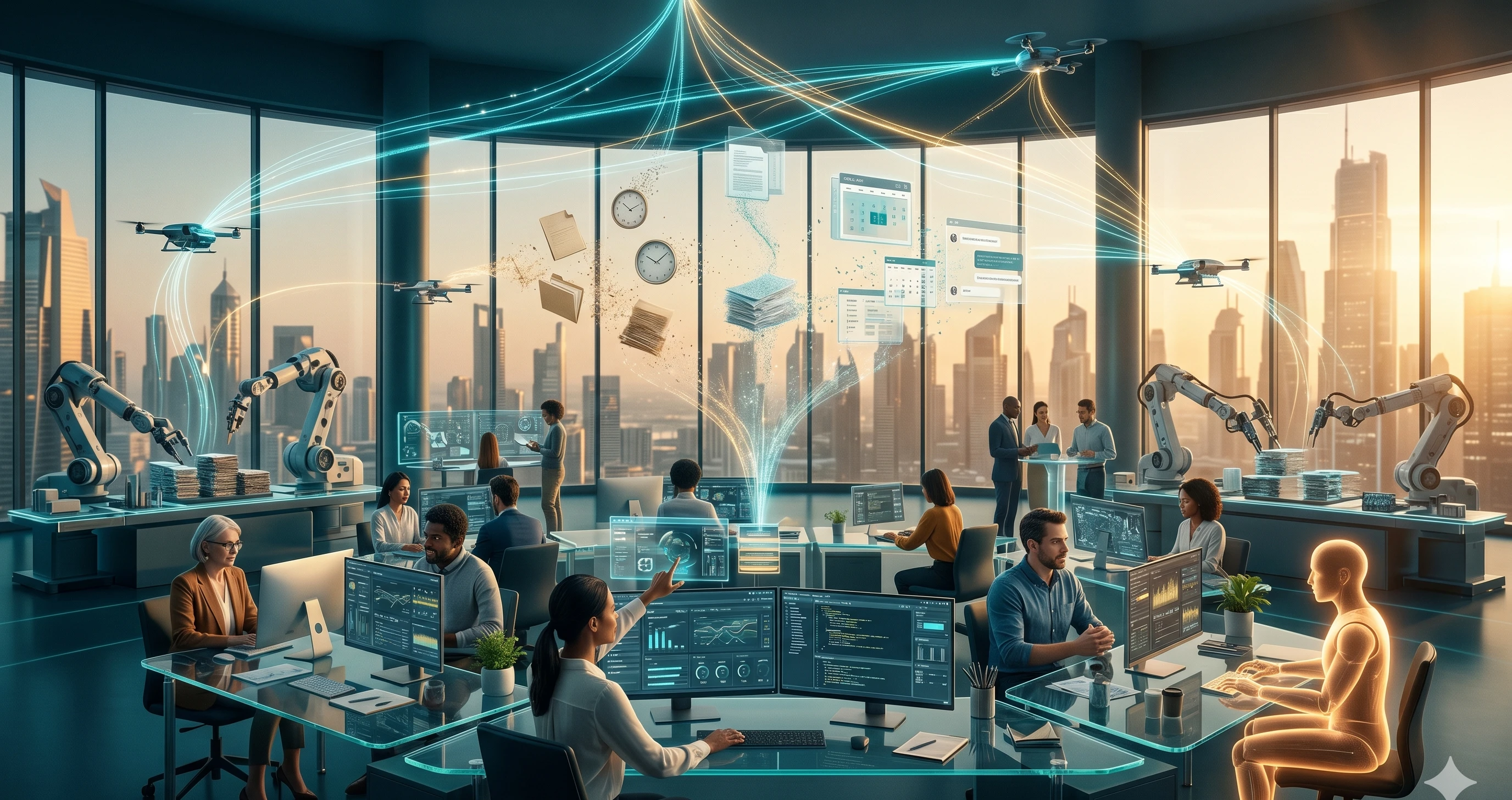
The future isn't human vs. machine — it's human + machine.
AI excels at processing large datasets, identifying patterns, and automating repetitive workflows. Humans excel at critical thinking, emotional intelligence, creativity, and ethical judgment. Organizations that successfully integrate AI are focusing on augmentation — using technology to enhance human capabilities rather than replace them.
Skills That Will Define the Future Workforce
As job roles evolve, so must the skills required to perform them. The demand is shifting from routine expertise to adaptable, future-ready capabilities:
- Digital literacy: Understanding AI tools and platforms
- Data interpretation: Turning insights into decisions
- Adaptability: Learning and unlearning quickly
- **Creative problem-solving**
- **Emotional intelligence and collaboration**
Lifelong learning is becoming the new norm. Traditional education models are giving way to continuous upskilling and reskilling.
Remote Work, Gig Economy, and Flexibility
AI and automation are also reshaping where and how work happens. Remote-first organizations, freelance and gig-based work models, and outcome-based performance over hours worked are all on the rise. Digital tools powered by AI enable seamless collaboration across geographies, making distributed teams more efficient than ever.
For businesses, this means access to global talent. For professionals, it means increased flexibility — but also increased competition.
Ethical Considerations and Challenges
With great technological power comes significant responsibility. Key concerns include bias in AI algorithms, data privacy and security, job inequality and economic disruption, and transparency in automated decisions.
Organizations must prioritize ethical AI practices, ensuring fairness, accountability, and trust. Governments and regulatory bodies are also stepping in to create frameworks that balance innovation with societal well-being.
Leadership in the Age of AI
Leadership itself is evolving. Future leaders must understand technology without needing to build it, foster a culture of innovation and experimentation, lead diverse hybrid teams, and balance efficiency with empathy. The ability to navigate ambiguity will become one of the most valuable leadership traits.
What Businesses and Professionals Should Do Now
To stay competitive, organizations need to invest in AI strategically, upskill their workforce, redesign workflows to integrate AI into core operations, build ethical frameworks for responsible adoption, and encourage a culture open to change.
Individuals must take ownership of their future by embracing continuous learning, staying curious about emerging technologies, and focusing on uniquely human strengths. The most successful professionals will not be those who compete with AI, but those who collaborate with it.
The Road Ahead
The future of work will not be defined solely by technology, but by how we choose to use it. AI and automation have the potential to create a more productive, flexible, and innovative world of work. But achieving that vision requires thoughtful implementation, ethical responsibility, and a commitment to human-centric progress.
The question is no longer if AI will transform work — it's how prepared we are to evolve with it.