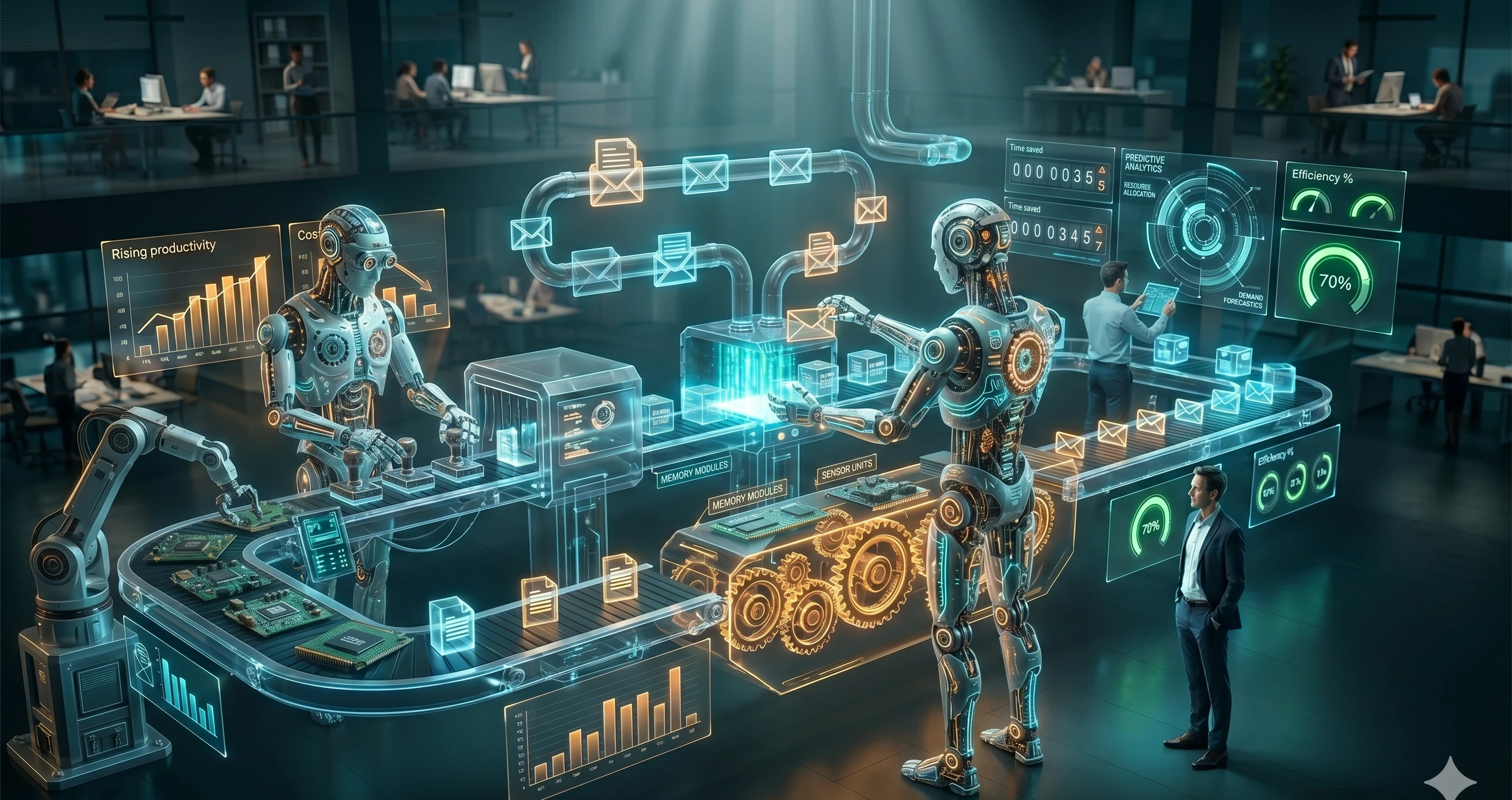
As enterprises adopt AI at scale, a critical realization emerges: fully automated systems rarely succeed in isolation. While automation drives efficiency, real-world environments — especially in domains like finance, healthcare, and legal — demand accuracy, accountability, and trust. This is where Human-in-the-Loop AI becomes essential.
Why Fully Automated AI Fails in Enterprises
AI models, no matter how advanced, operate under uncertainty. They encounter ambiguous or incomplete data, edge cases not seen during training, and domain-specific nuances that require expert judgment.
Without oversight, these limitations can lead to errors, compliance risks, and loss of trust. In high-stakes environments, even small inaccuracies can have significant consequences.
Human Validation Workflows
Human-in-the-loop systems integrate human expertise directly into the AI pipeline. Instead of replacing humans, they augment decision-making by flagging low-confidence outputs for review, allowing experts to validate or correct results, and providing audit trails for compliance and transparency.
This ensures that critical decisions are both accurate and accountable.
Feedback Loops and Continuous Learning
One of the most powerful aspects of HITL is its ability to create continuous improvement cycles. Human corrections are fed back into the system, enabling model refinement over time, better handling of edge cases, and increased accuracy with real-world data.
This transforms AI from a static model into a learning system that evolves with usage.
Balancing Automation with Control
The goal is not to reduce automation, but to balance speed with reliability. Effective human-in-the-loop systems automate high-confidence tasks, route complex cases to humans, and gradually reduce intervention as confidence improves. This hybrid approach delivers both efficiency and trust.
The Enterprise Advantage
Human-in-the-loop AI enables organizations to deploy systems that are not only intelligent, but production-ready. It builds confidence among stakeholders, ensures regulatory compliance, and supports scalable adoption.
The organizations that succeed with AI in production are the ones that stopped trying to remove humans from the loop, and started designing loops humans actually want to be in.